Exit Isn’t an Afterthought: How to Avoid Overwhelm Before You Cash Out
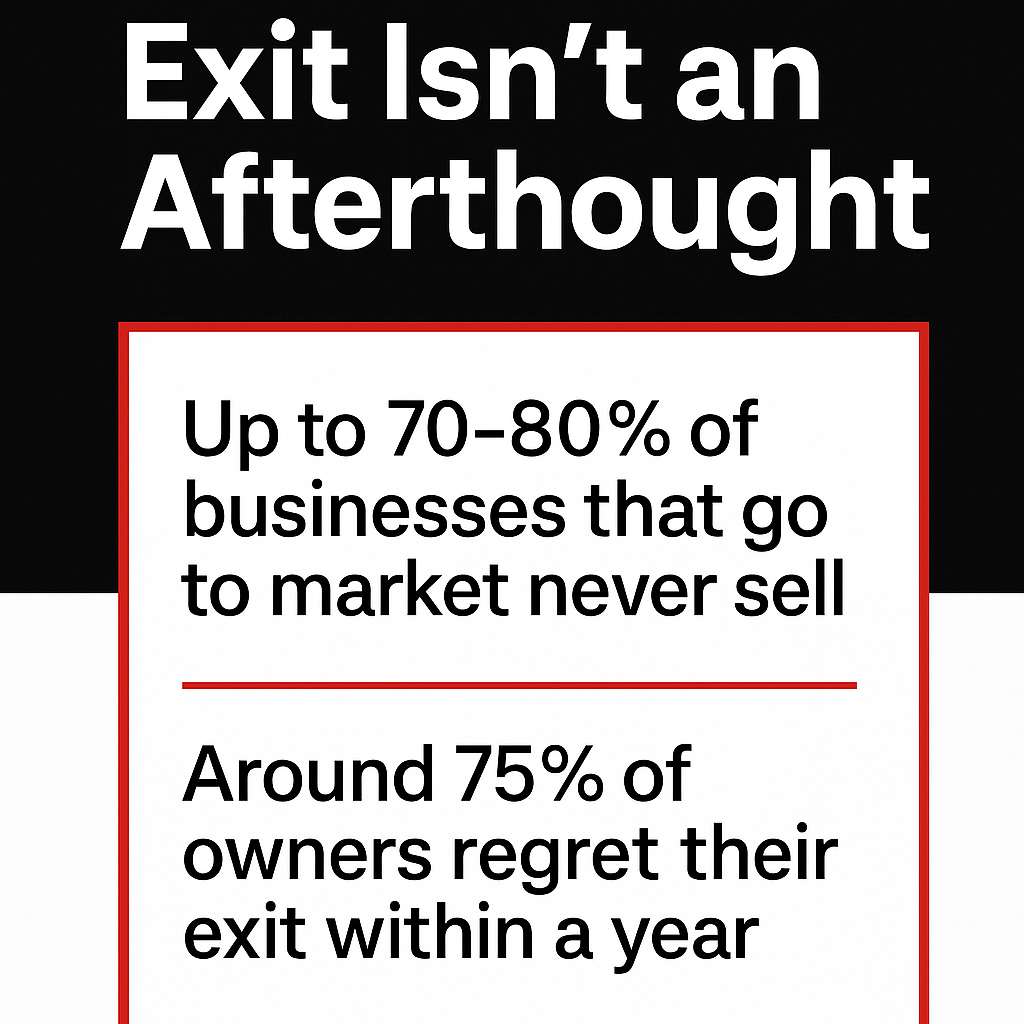
Most business owners imagine they’ll choose exactly when and how they exit their company. The reality? According to the Exit Planning Institute, up to 70–80% of businesses that go to market never sell. And for those that do, around 75% of owners regret their exit within a year.
Why? Because exits usually aren’t driven by perfect timing. They’re driven by overwhelm, health issues, or other unexpected events.
Here’s the thing: overwhelm creeps in. You don’t always notice it until you’re buried. And when overwhelm becomes the driver of your exit, you lose control of both the process and the outcome.
The bottom line: exit planning works best when it’s part of your business model—not a rushed reaction when life forces your hand.
Overwhelm Isn’t a Strategy
For most owners, overwhelm doesn’t show up as one big crash. It builds slowly, hiding in the daily grind:
• You’re still pulled in too many directions.
• Your team depends on you for nearly every decision (or worse, to fix their work).
• You don’t have a clear picture of your numbers, or what they’re really telling you.
• Information is scattered across spreadsheets, making it hard to see the full picture.
• Family life feels the weight of your business, even when you’re home.
The cost?
• You end up reacting instead of scaling the business with confidence.
• Opportunities get missed.
• Clients and employees feel the inconsistency and get frustrated.
• And the company you’ve poured your life into starts losing value—even if revenue is strong.
Overwhelm doesn't just drain your energy; it drains your business.

Exit as a Strategy, Not an Afterthought
Exit planning isn’t about walking away tomorrow. It’s about building a business that gives you options—options you control, instead of overwhelm (or an unexpected event) controlling them for you.
Think of it this way:
Exit = Long-Term Planning + Short-Term Wins.
• Short-term wins look like reducing frustrations for you, getting a better handle on your cash flow, improving profits, and holding your leadership team more accountable.
• Long-term impact shows up in stronger profits, more freedom for you, and a smoother exit whenever you’re ready.
And let’s be clear: the goal isn’t to create some fantasy business that runs completely without you. That’s a myth. The goal is a business that doesn’t need you in the middle of every decision—that can operate and grow while giving you more freedom.
Here's the bonus: when you build with your exit in mind, your business actually gets stronger today.
The Hidden Costs of Waiting
Too many owners delay, thinking, “It’s too early,” or “I’m too busy.” In fact, 63% of owners say it’s too early to plan, and 45% say they’re too busy (Exit Planning Institute). That’s overwhelm talking.
But waiting has costs:
• Missed opportunities. If a buyer or merger opportunity comes up, you won’t be ready to take advantage of it.
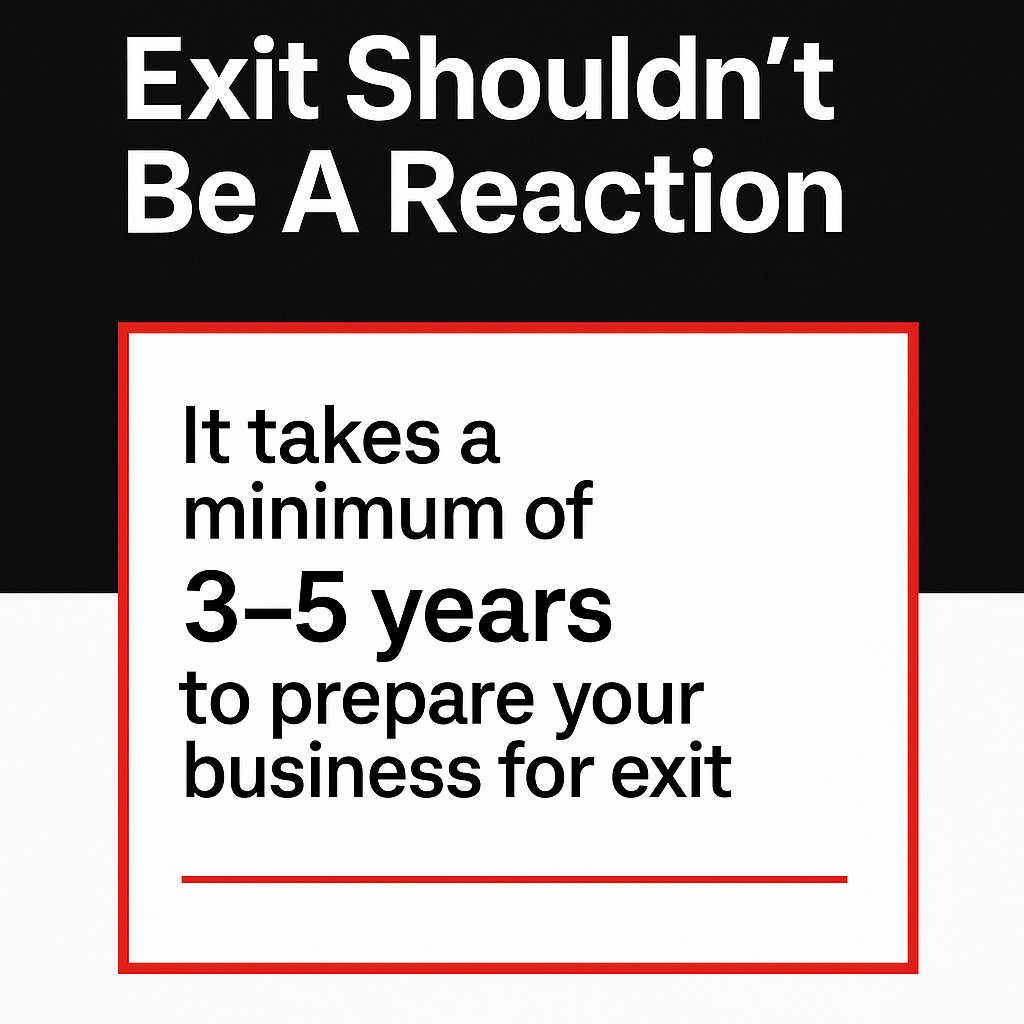
It typically takes a minimum of 3-5 years to properly prepare yourself and your business for an exit.
• Forced sales = lower value. Owners who exit under pressure—because of health, family, or sheer exhaustion—rarely get top dollar.
Studies show owners who rush the process can lose 20-50% of their potential value.
• Perceived vs. actual value gap.
• Deals falling through. Roughly half of pending deals collapse before closing.
Half of all pending deals fall apart before closing.
What Exit Planning Really Looks Like
Here’s the truth: exit planning isn’t a countdown clock. It’s not about putting up a “For Sale” sign. It’s about strengthening your business and giving yourself breathing room.
In real life, that looks like:
• Getting clear on your numbers so you have meaningful data to make more confident decisions.
• Tightening up processes so your team actually follows them and operations run smoother.
• Building leadership accountability.
• Lining up business goals with personal goals.
Start a minimum of 3-5 years out. That's the time you need to build leadership, strengthen financials, and show steady performance buyers or successors respect.
The Endgame: Freedom, Profit, and Legacy
At the end of the day, most owners want the same three things:
• Freedom: More control of their time, without micromanaging.
• Profit: Bottom-line results that reflect their years of effort.
• Legacy: Confidence that employees and clients will be taken care of, and that their business will outlast them.
The good news? These aren’t competing goals. When you plan early, you don’t just prepare for your exit—you create a business that gives you breathing room today and sets you up for a profitable future.
That’s the kind of business worth building.
If you're ready to stop letting overwhelm and daily emergencies dictate your future and start making the shifts so your business works without you in the middle of everything, let's talk.